Skip to main content
Industry News Carrier and logistics headlines. Open the original source for the complete article.
Browse by topic Showing: Trade Press
424 headlines
Fixed Fee. No Gain Share.
Industry FreightWaves - Trucking · Jul 6, 2026
The new Manifestación de Valor Electrónica (MVE) requirement shifts Mexico’s customs value declaration process from paper to digital, requiring importers to electronically submit shipment values along with supporting documentation before freight clears customs. While many companies have focused on the mechanics of filing the new declaration electronically, Lau said the larger challenge is ensuring every document associated with a shipment contains consistent information. “What we see with some of our customers is they make use of technology,” Lau said.
The furniture maker expects to nearly complete two centralized hubs this year as part of a multiyear distribution overhaul. La-Z-Boy expects its network redesign to eventually cut heavy-furniture delivery mileage 20%. The furniture maker is in year two of the four-year revamp, which included completing the Western leg last year with the opening of an Arizona facility, Luebke said.
The furniture company leveraged cargo partnerships to secure capacity at a contractual rate as a way to offset higher oil prices and spot market volatility. Lovesac used cargo partnerships to secure freight capacity at a contractual rate in Q1 as a shield against spot market volatility, President and COO Mary Fox said during a June 11 earnings call. Through Lovesac’s “beneficial cargo partnership,” the furniture retailer was able to help offset higher freight costs, resulting from increasing oil prices, the COO told analysts.
This week in Borderlands Mexico: Cargo theft falls, but attacks on truckers turn deadlier; Clarios opens $147M battery distribution center in Torreón; and Craters & Freighters Austin opens expanded logistics facility. While those figures represented a 16% decline from the previous year, Ramos said “the violence in robberies has been a trigger that, as a sector, we cannot allow to continue,” according to WRadio. About 70% of freight arriving at the Port of Veracruz moves toward central Mexico, forcing thousands of trucks to travel through the corridor where Canacar estimates more than half of cargo robberies occur.
Ben Volkwyn, Triumph’s executive vice president and head of enterprise data and intelligence, said the product grew out of conversations with brokers who described contract pricing as harder than it used to be. RFP cycles are faster, the market is a lot more volatile, and traditional benchmarks just don’t always reflect what’s actually happening,” Volkwyn said. “What our tool does is not only make it a lot easier from an Excel spreadsheet perspective, but it already puts it inside the workflow,” Volkwyn said.
Since then, recent criticism of the legislation has questioned whether documented cargo theft data justifies expanding the federal government’s role in investigating organized retail crime and supply chain theft. Supporters argue the current reporting system captures only a fraction of the crimes occurring nationwide, making today’s numbers an incomplete picture of organized cargo theft. The center would coordinate investigations involving organized retail crime and organized supply chain crime while bringing together federal, state and local law enforcement agencies with private industry.
It also means that the number of workers in the truck transportation sector has not been able to recover from a brutal 2025, when the figure opened the year at 1,493,100 jobs and closed it at 1,467,200 jobs, slightly higher than where they stand today. Warehouse jobs are still less than they were a year ago, with a June total of 1,850,600 jobs notably less than the 1,871,900 jobs they were at in June 2025. The average number of hours worked in truck transportation in May–that data is on a one-month lag–was 41.2 hours.
According to Brittany Graft, chief operating officer at Highway, about 90% of the carriers on the Highway system already have their ELD connected into the company. Asked why a carrier in the Highway system previously would not have chosen to connect its ELD to the company, Graft said brokers “have differing levels of requirements.” Some may not have mandated that a carrier they are onboarding needed to have its ELD connected. Given that the 90% figure for companies connected to the Highway system existed before Montgomery, and that Highway “gives brokers a good amount of visibility, what we’ve seen coming out of the decision is that they want to continue to drive that number higher and are pushing for that visibility,” Graft said.
The new orders subindex—an indicator of future activity—was also higher for a sixth straight month at 56. “[New orders] demand sentiment was positive in June, with a 2.7-to-1 ratio of positive to negative comments,” said Susan Spence, chair of the ISM Manufacturing Business Survey Committee. Intraquarter updates provided by public LTL carriers in early June showed freight demand continued to improve.
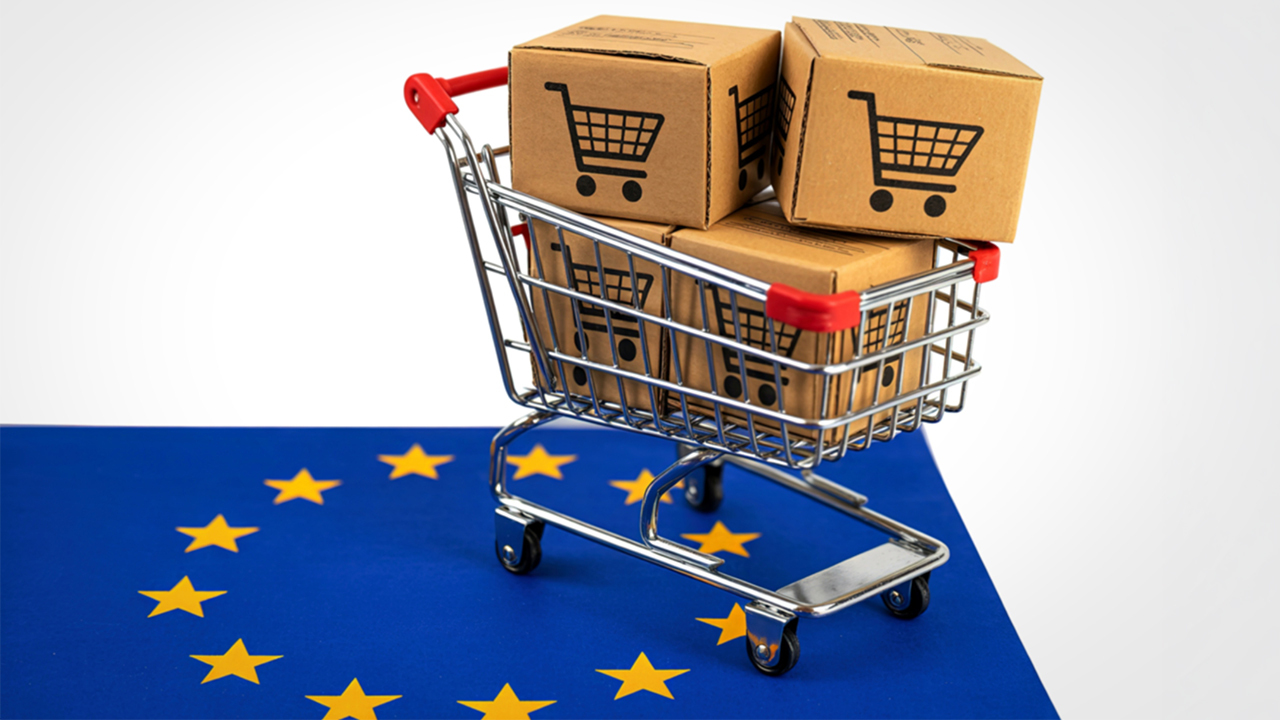
E-commerce retailers and logistics providers are scrambling to comply with new European Union customs rules and fees, effective Wednesday, aimed at addressing concerns over tariff fairness, domestic manufacturing, and product safety associated with a wave of low-value imports entering the bloc through parcel channels. Each B2C parcel entering the EU will be subject to a flat 3 euro ($3.41) charge per product category (e.g. two T-shirts=one item; a T-shirt and a collared shirt= two items, or 6 euros) within a parcel. “If there’s 10 million parcels B2C parcels a day going into a country like the Netherlands and there’s two SKUs on average per package, that’s $60 million in revenue for the country in a single day.